How Long Does SEO Take? Honest Timelines From Real Data
Ahrefs found only about 6% of new pages reach the top ten within a year, and the average top result is over two years old. What that means for your plan and budget.
The answer nobody selling SEO wants to give
Anyone promising first page rankings in two weeks is lying to you, and the industry's own data proves it. Ahrefs' well known ranking study, which analyzed millions of pages, found that only about 5.7% of newly published pages reach Google's top ten within a year, and the average page holding a top position is more than two years old, per Ahrefs' research.
That is the honest baseline: SEO is a compounding asset with a slow ignition. Whether that is bad news depends entirely on whether you plan for it or get surprised by it.
The realistic month by month picture
For a small business site publishing consistently, the typical arc looks like this:
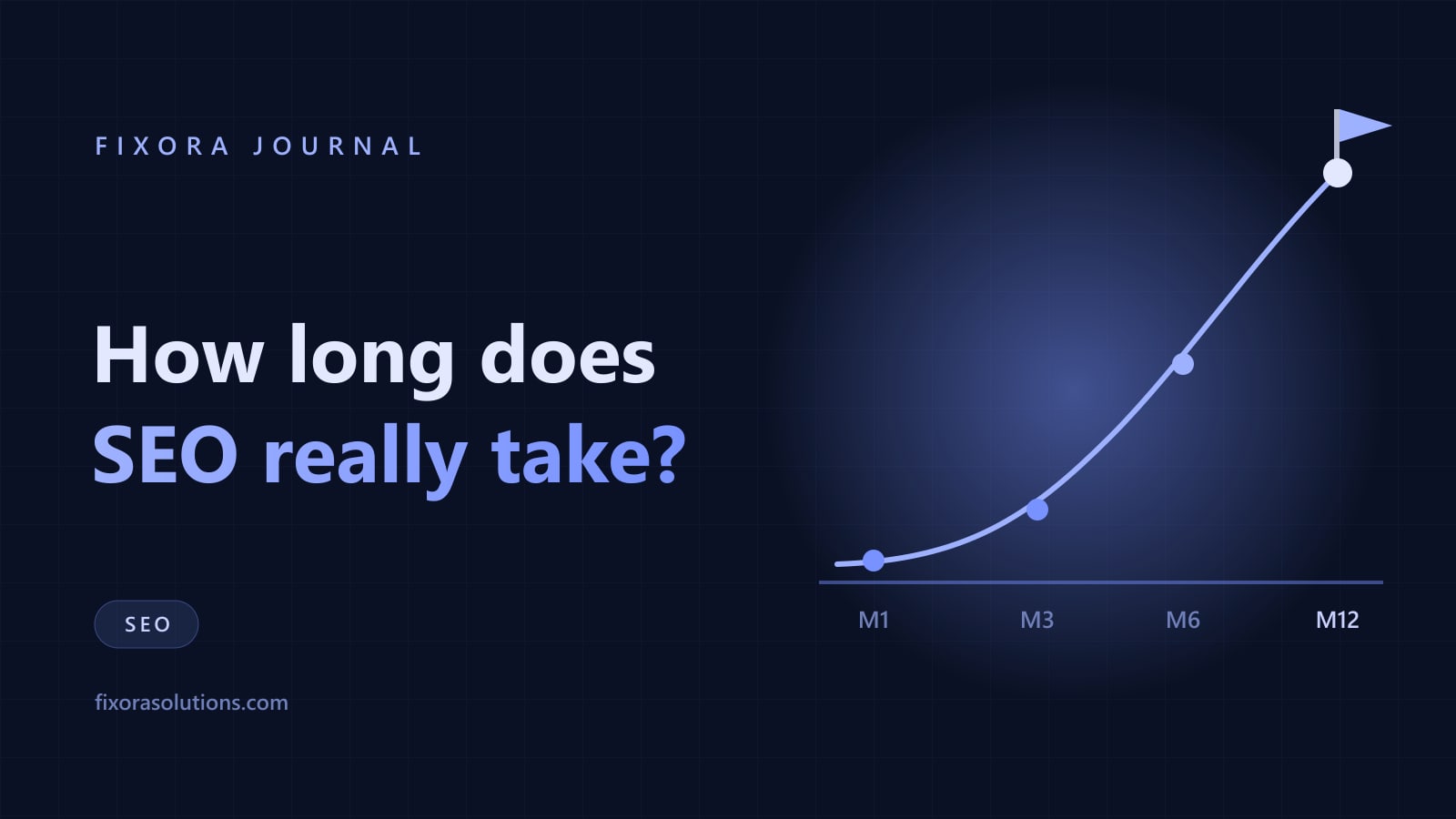
- Months 1 to 2: plumbing. Technical fixes, page structure, tracking, and the first content ships. Rankings barely move. This is normal.
- Months 3 to 4: first signals. Long tail phrases with low competition start ranking. Impressions grow in Search Console while clicks stay modest.
- Months 5 to 8: real movement. Question pages and comparison pages, the kind that answer engines also love to cite, begin producing steady visitors and the first attributable inquiries.
- Months 9 to 18: compounding. Older posts mature into their rankings, internal links multiply, and organic becomes a reliable lead source with effectively zero marginal cost per visitor.
Local rankings move faster: profile and review improvements often shift map visibility within weeks, which is why service businesses should run local SEO and content SEO together.
What actually speeds it up
Not hacks. Concentration:
- Answer real buyer questions, one per page. "How much does X cost," "X vs Y," "how long does X take." These rank sooner because they match intent precisely, and they convert because the reader is shopping. You are reading an example right now.
- Depth over volume. One thorough page beats five thin ones, in rankings and in citations by AI search.
- Internal links. Every new post should link to and from older relevant pages. It is free authority most sites never spend.
- Publishing cadence. A post a week for a year beats fifty posts in one month followed by silence. The same consistency rule that governs social media governs crawlers.
The budget implication
Because SEO pays late and compounds, it should never be your only channel while you need leads this quarter. The pairing that works: one fast channel for now (ads or outbound) plus SEO for the future, funded as a fixed monthly investment you never judge by week two. The budget framework post shows how to split the money.
Frequently asked
Can AI content shortcut the timeline? AI shortens production, not maturation. Publishing more useful pages sooner helps; publishing generic pages faster gets filtered. Human edited, genuinely useful content is the bar, the same rule as everywhere in AI marketing.
When should I give up on a page? Update before you abandon. A refresh with better answers and new internal links often revives a page in weeks, far cheaper than starting over.
Can Fixora run SEO with honest reporting? Yes: strategy, content engine, technical work, and a monthly report that shows real movement against these exact timelines. Send us your site for an audit and a fixed quote within 48 hours.
Have a project that needs this?
Tell us what you are building. We reply within 24 hours.
The service behind this
AI Marketing Services
A full marketing function without the headcount: strategy, content, campaigns, and outbound, run as one system and reported on the numbers that decide whether it paid.