Creative Fatigue: Your Ads Did Not Stop Working, Your Audience Stopped Looking
When performance drops, most teams change targeting or raise bids. The evidence points at the creative: repeated exposure to the same execution produces measurable decline in response.
The wrong diagnosis, made confidently
Performance drops. The team narrows the audience, raises the bid, moves budget, changes the landing page. Sometimes it recovers briefly. Usually it does not, and the conclusion is that the platform got worse.
The more common cause is that the same people have now seen the same advertisement many times, and they have stopped noticing it. Platforms report this directly as frequency, and almost nobody looks at it before changing something else.
What fatigue looks like in the numbers
The signature is specific enough to diagnose confidently:
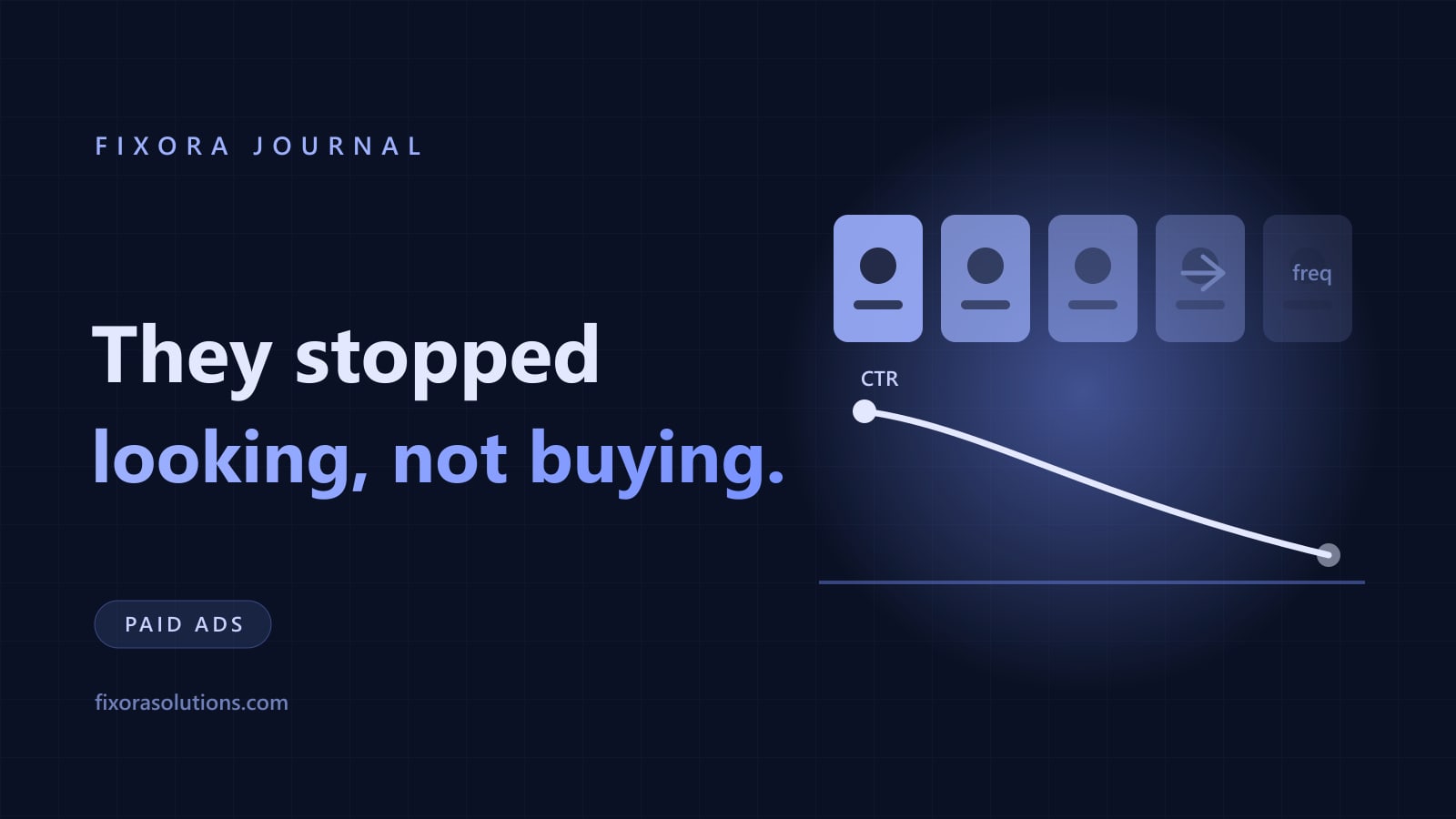
- Frequency climbing while reach flattens. You are buying the same people repeatedly.
- Click through rate falling while impressions hold steady.
- Cost per result rising without a change in competition or targeting.
- First time impression performance staying healthy, if you can segment it, while repeat exposure performance collapses.
If click through is falling and frequency is rising together, the audience is not wrong and the bid is not wrong. The advertisement is worn out.
Why it happens faster than people expect
Attention is the scarce input, and novelty is what buys it. A creative execution earns attention on first exposure, less on the third, and close to none by the tenth. In a small, tightly targeted audience this happens quickly, because you exhaust the pool and then keep paying to hit it again.
Narrow targeting accelerates fatigue. A precise audience of ten thousand people reaches saturation far sooner than a broad one, which is the counterintuitive reason very tight targeting often underperforms over a full campaign.
What actually fixes it
Rotate executions, not just headlines. A new colour and a reworded headline is the same advertisement. Change the format, the opening frame, the angle, or the person on screen.
Vary the angle, not only the asset. Different objections, different situations, different proof. This maps onto the buying triggers behind the 95:5 rule: one message cannot address every entry point into your category.
Build a small library before launching, not after the decline. Three to five distinct executions in rotation lasts far longer than one refreshed reactively.
Cap frequency deliberately where the platform allows, and broaden the audience before you narrow it.
Keep the winners and retire them temporarily. A rested creative often performs again weeks later. Fatigue is not always permanent.
The trap of optimising the wrong variable
Every fix aimed at targeting or bidding while creative is the cause produces the same pattern: a small temporary improvement, then continued decline. Meanwhile the account accumulates complexity nobody can unwind.
Before changing structure, check frequency and click through together. It takes two minutes and it prevents weeks of expensive activity, which is the same measurement discipline as the six numbers.
Where creative comes from
The best performing paid creative is usually not made for paid. It is content that already earned attention organically: a short video that performed, a post people argued about, a customer explaining the problem in their own words. Creator footage frequently outperforms polished brand film, which is one of the quieter findings in the micro influencer data.
Buying the rights to reuse creator content, as covered there, is often the cheapest source of fresh executions a small advertiser has.
Frequently asked
What frequency is too high? It depends on format and cycle length, so watch the trend rather than a universal threshold. Rising frequency plus falling click through is the signal, whatever the absolute number.
How many creatives do we need? Three to five distinct executions per campaign, refreshed on a schedule rather than in a panic.
Can Fixora produce the rotation? Yes: the creative library, the rotation schedule, and the reporting that separates fatigue from targeting problems. Send us your account and get a read within 48 hours.
Have a project that needs this?
Tell us what you are building. We reply within 24 hours.
The service behind this
AI Marketing Services
A full marketing function without the headcount: strategy, content, campaigns, and outbound, run as one system and reported on the numbers that decide whether it paid.