Google Ads Runs Itself. Five Things It Cannot Decide
Keywords became themes, match types became interpretations, and campaign types started choosing their own placements. Control did not disappear, it moved to inputs, and most accounts are feeding it badly.

The levers moved, they did not vanish
A decade ago you chose keywords, wrote the ad, set the bid, and picked the placement. Today Performance Max allocates across Search, Shopping, YouTube, Display, Discover, Gmail and Maps on your behalf, search themes give direction rather than instruction, and matching extends to intent rather than words.
The common reaction is either to fight it or to surrender to it. Both are expensive. The accurate reading is that control moved from instructions to inputs, and an automated system fed badly produces confident, well optimised waste.
Here is what you still decide.
1. What counts as a conversion
The most consequential setting in the entire account, and the most commonly wrong.
If page views, phone clicks and form submits are all primary conversions with equal value, the bidding system optimises toward whichever is cheapest to produce. That is never the one worth money. It will then report a superb cost per conversion while your pipeline stays empty.
One primary action that means revenue. Everything else secondary. If you can pass offline conversion data back, the leads that actually became customers, do it, because that changes what the system optimises toward more than any other single input.
2. What the system is allowed to spend on
Automation expands into whatever you have not excluded.
Account level negative keyword lists. Brand exclusions so you can see what the campaign found versus what it harvested from demand you already created. Location settings on Presence rather than Presence or interest. Schedules that match when someone answers the phone.
Then read the search terms report monthly, because it is the only place you see what you actually bought. The full pass is in the one hour Google Ads audit.
3. The creative and the feed
When placement decisions are automated, the assets become the main variable you control. The system chooses which of your creatives to serve; it cannot invent a better one.
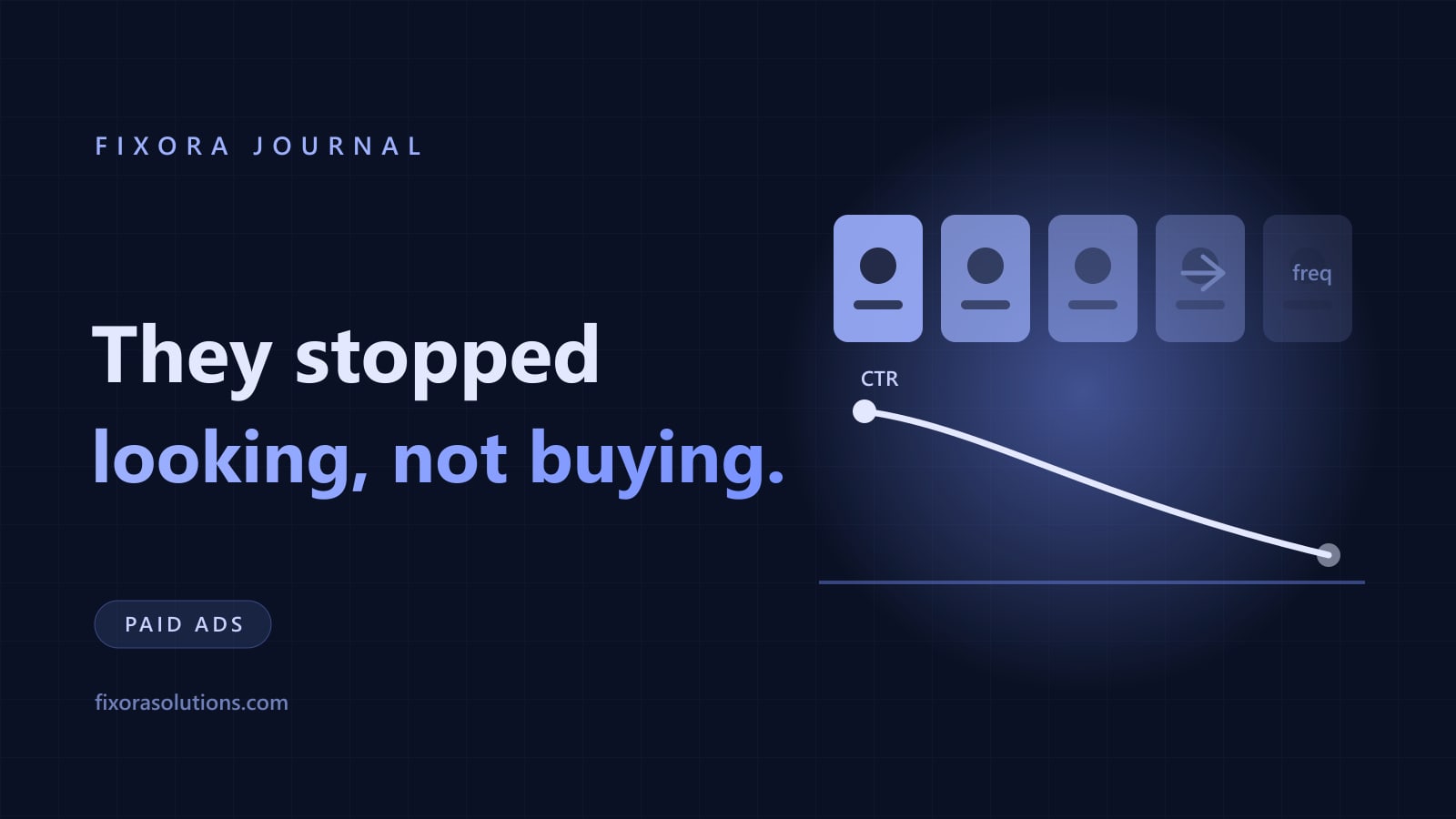
For lead generation that means enough headline and image variants for real rotation, because response decays with exposure, per creative fatigue. For retail it means the product feed, where completeness and accuracy now determine eligibility across Shopping and increasingly across agentic surfaces too.
A weak feed is a spending limit you did not know you had set.
4. Structure, so you can still see anything
Automation is happy to give you one campaign and one number. Resist it.
Separate brand from non brand, so reported ROAS is not flattered by people who were always going to arrive. Separate genuinely different products or services, because one budget across four offers optimises toward whichever converts easiest, not whichever is most profitable.
Structure is how you retain the ability to diagnose. Once everything is in one bucket, you can see the result but never the cause.
5. Where the click lands
The part Google does not touch at all, and the last of the six checks in our audit because it is where the savings from the other five get spent.
An automated campaign matching a specific intent, delivered to a homepage that answers twelve questions, wastes the precision you paid for. One page per ad group, message matched to the query. The argument is in never send paid traffic to your homepage.
The measurement warning
As more of the mechanism becomes opaque, the temptation is to trust the platform's own reporting. Do not, entirely. Paid channels carry tracking and get full credit; the channels that created the demand carry none, which distorts budget allocation over time for the reasons here.
One free text field on your enquiry form asking how people heard about you costs nothing and is the only instrument that sees what the platform cannot.
What a small advertiser should actually do
If your budget is modest, the honest advice is to keep it tight rather than to hand it over. Phrase and exact match in standard search campaigns, one contained automated campaign to see what it finds, and a hard rule that you read the search terms before increasing anything.
Automation rewards scale and good data. If you have neither yet, guardrails are worth more than reach.
Frequently asked
Is Performance Max worth running? Often, for retail with a good feed. For lead generation on a small budget, it frequently harvests your brand demand and reports it as new performance.
Should we still use exact match? Yes, particularly under a few thousand a month. Matching has widened, so exact is now a guardrail rather than a guarantee.
Can Fixora audit our account? Yes: conversions, exclusions, structure, assets, and the landing pages, with the specific rows costing you money. Give us read access and get findings within 48 hours.
Have a project that needs this?
Tell us what you are building. We reply within 24 hours.
The service behind this
AI Marketing Services
A full marketing function without the headcount: strategy, content, campaigns, and outbound, run as one system and reported on the numbers that decide whether it paid.