The Five Ecommerce Email Flows Worth Building First
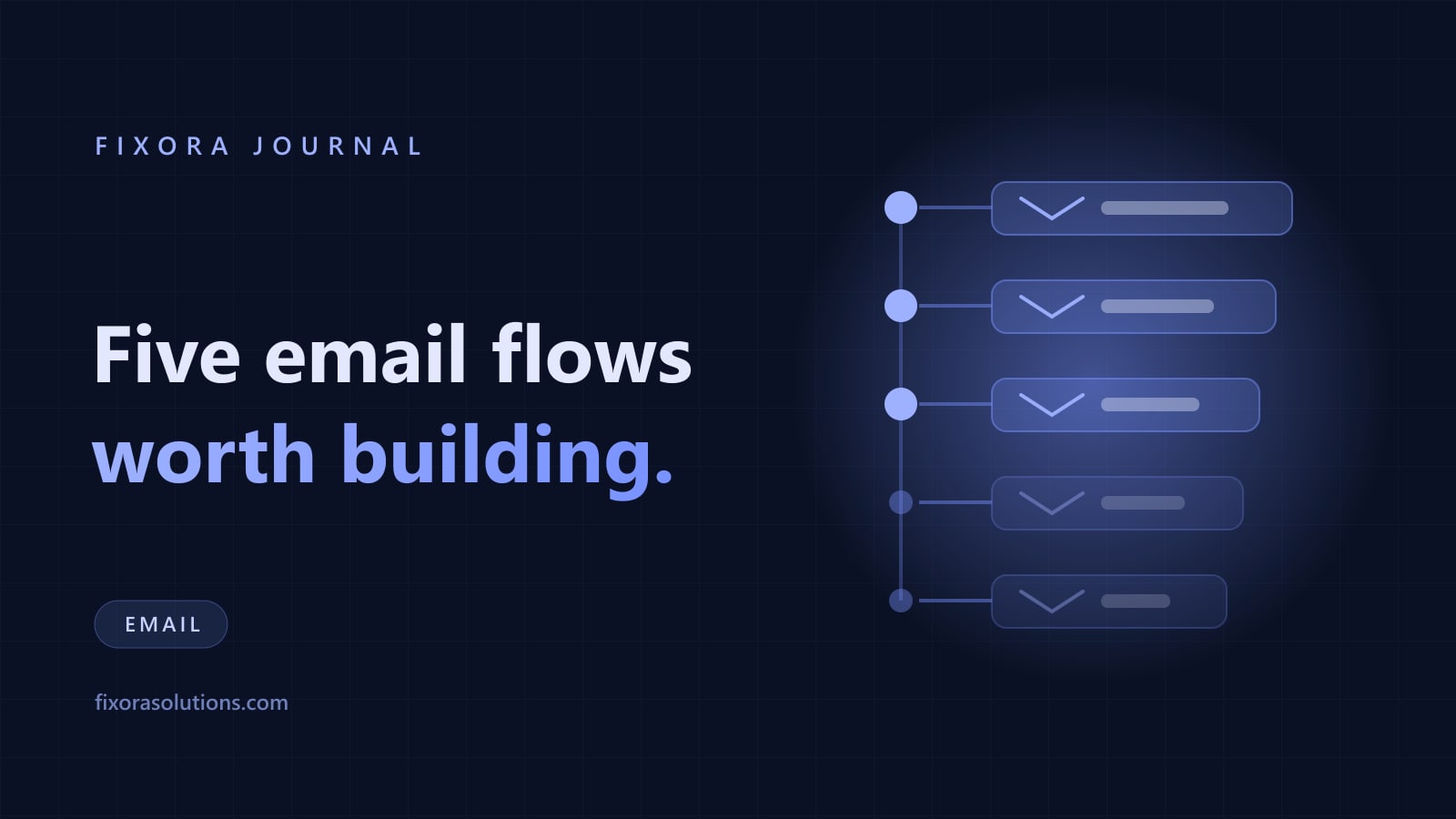
Automated flows are a small share of the emails a store sends and a large share of the revenue it earns from email. Five of them do almost all of that work.
Campaigns get the attention, flows earn the money
A store sends a campaign, watches the revenue spike, and plans the next one. Meanwhile the automated flows, which nobody has touched since setup, quietly out earn all of it per email sent, because they arrive at the moment the person is actually thinking about the product.
Campaigns are broadcast to everyone at your convenience. Flows are triggered by behaviour at the customer's. That difference is the entire reason flows perform.
The five, in build order
1. Abandoned checkout. Build this first. These people chose a product and entered checkout, so the intent is already established. Three messages: one within an hour, one at roughly a day, one at roughly three days. Show the item, remove one objection such as delivery cost or returns, and do not lead with a discount you did not need to offer. The reasons behind the abandonment are covered in the cart abandonment guide.
2. Welcome series. Someone gave you an email address, which is the highest interest they will have until they buy. Three to four messages over a week: what the brand is for, the bestseller, the proof, the reason to buy now. Deliver whatever you promised at signup immediately.
3. Post purchase. The most neglected and the highest leverage. Confirm and set delivery expectations, then follow up after arrival to ask for a review, then introduce the natural second purchase. This flow builds the reviews that lift every product page and drives the repeat rate that makes acquisition affordable, which is the retention maths in practice.
4. Browse abandonment. Viewed a product, did not add to cart. Lighter touch than checkout abandonment: one or two messages, helpful rather than pushy, because the intent is weaker and pressure reads as surveillance.
5. Winback. Customers who bought once and went quiet past your normal repurchase window. One honest message asking whether the product worked, then one offer. Keep the list clean afterwards: people who ignore winbacks should stop receiving mail, which protects inbox placement for everyone else.
The rules that apply to all five
Timing beats copy. An average email an hour after abandonment outperforms a brilliant one three days later.
One job per message. One product, one objection, one action.
Discount last, not first. A store that always sends 10% off within an hour teaches customers to abandon deliberately. Reserve the incentive for the final message, if at all.
Exit conditions. Every flow must stop when the person buys. Receiving an abandonment reminder after paying is the fastest way to lose credibility.
Mobile first. Most of these are read on a phone within minutes. One column, large tap targets, and the point above the fold.
Measuring them honestly
Track revenue per recipient by flow, not open rate. Compare each flow against the alternative of not sending it, which means watching whether total revenue rose or the same purchases simply got attributed to email.
Review quarterly. Flows decay: products go out of stock, links break, and the tone drifts from the brand. A broken flow fails silently for months. Judge them alongside the numbers that matter.
Frequently asked
Which platform? Any of the major ecommerce platforms handles these. The build quality matters far more than the brand of tool.
How many emails is too many? Watch unsubscribes and complaints per flow. Under 0.1% complaints is healthy; approaching 0.3% is a delivery problem, not a copy problem.
Can Fixora build these? Yes: the five flows, written and built, with exit conditions and reporting on revenue per recipient. Send us your store and get a scope within 48 hours.
Have a project that needs this?
Tell us what you are building. We reply within 24 hours.
The service behind this
AI Marketing Services
A full marketing function without the headcount: strategy, content, campaigns, and outbound, run as one system and reported on the numbers that decide whether it paid.
Keep reading
 Email marketing
Rented Reach, Owned Audience, and the Case for a Boring Newsletter
Aug 05, 2026 · 4 min read Email marketing
Why Your Emails Land in Spam (And the Fixes That Work)
Jul 22, 2026 · 4 min read Email marketing