The 70% Problem: Why Carts Get Abandoned and How to Fix It
Baymard puts average cart abandonment at 70.22%, and mobile is worse at roughly 80%. The reasons are boring, documented, and mostly fixable this week.
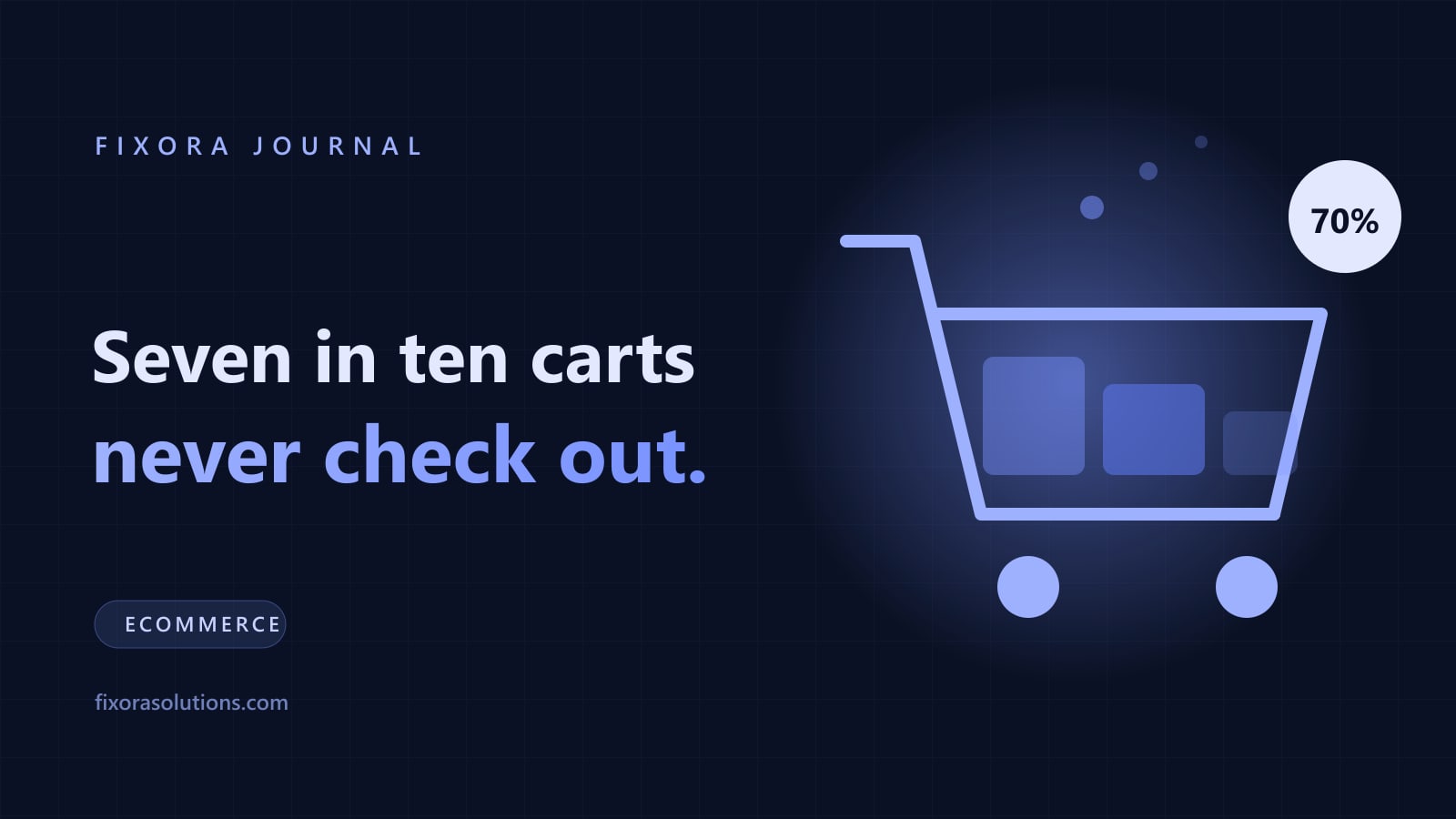
Seven in ten carts never reach checkout
The Baymard Institute maintains the reference number, averaged across dozens of studies: 70.22% of ecommerce carts are abandoned. On mobile it runs closer to 80%, and mobile is where most shopping now starts.
Read that as good news. These are people who wanted the product enough to add it. They are not a traffic problem, they are a friction problem, and friction is the cheapest thing in marketing to remove.
Why they actually leave
Baymard's research into abandonment reasons is remarkably consistent year after year, and almost none of it is about price alone:
- Extra costs revealed late. Shipping, taxes, and fees appearing at the final step is by far the biggest single reason.
- Forced account creation. Asking someone to register before buying, for your convenience, not theirs.
- A long or confusing checkout. Every extra field is a chance to reconsider.
- No trust. No reviews, no clear returns policy, no visible way to reach a human.
- Delivery uncertainty. No date, no cost, no answer.
- A slow or broken page. Which is the same tax speed puts on everything else.
The checkout rules that recover the most
- Show the full price early. Put shipping cost and delivery date on the product page, not at step four. Free shipping above a threshold works better than discounting the item.
- Offer guest checkout. Always. Ask for the account after the purchase, when they have a reason to want one.
- Cut the form to what you need to ship the order. Autofill the rest. Every removed field is measurable.
- Put proof in the checkout. Reviews, returns policy, and a contact number. Trust signals do more work here than anywhere else, which is why reviews are a revenue asset, not a vanity one.
- Support the payment methods your market actually uses, including cash on delivery where that is the norm.
Recovering the ones who still leave
Some abandonment is normal. Comparison shopping and saving for later will never go to zero. What you can do is come back once, usefully.
An abandoned cart sequence of two or three messages, the first within an hour, is among the highest returning automations a store can run, and it fits inside the broader email economics. In this market, a WhatsApp follow up often outperforms email outright because it is actually read. Keep it short, show the item, remove one objection, and do not lead with a discount you did not need to give.
What to measure
Track add to cart rate, checkout start rate, and checkout completion rate separately. A single conversion number hides which step is bleeding. Then judge campaigns on revenue per visitor rather than traffic, in line with the numbers that matter, and remember that the landing page before the cart sets up everything that follows.
Frequently asked
Is a 70% abandonment rate bad? It is average. Worry about the trend and about which step loses people, not the headline figure.
Do discount popups work? They lift short term conversions and train shoppers to wait for the code. Use sparingly, and never as the fix for a broken checkout.
Can Fixora audit our store? Yes. We map every step from ad to receipt, show where the drop happens, and quote only the fixes worth doing. Send us your store and get findings within 48 hours.
Have a project that needs this?
Tell us what you are building. We reply within 24 hours.
The service behind this
AI Marketing Services
A full marketing function without the headcount: strategy, content, campaigns, and outbound, run as one system and reported on the numbers that decide whether it paid.