Brand Identity vs Logo: What You Are Actually Buying
A logo is one file. An identity is the set of rules that stops fifteen people producing fifteen different versions of your company over the next three years.
The distinction, in one sentence
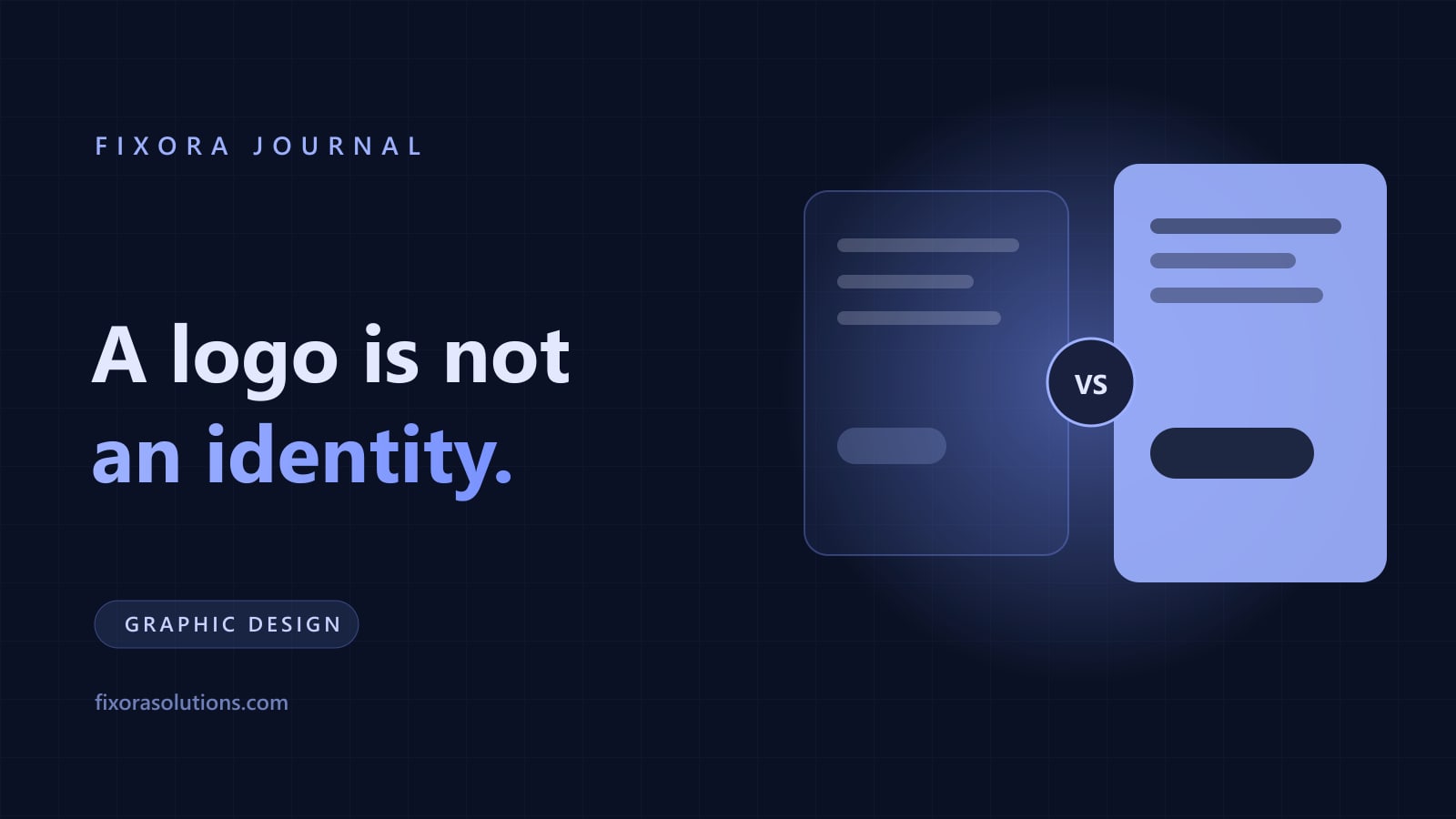
A logo identifies you. An identity makes everything else you produce look like it came from the same company.
That sounds like a semantic difference. It is a practical one, and you discover it about six months after buying a logo, when the first person who is not a designer needs to make something.
What goes wrong with a logo alone
You buy a mark. It looks good in the presentation. Then reality arrives.
Someone needs a square profile picture, so they crop the horizontal logo and it looks broken. Someone builds a proposal template and picks a typeface from a dropdown. Someone else makes a social post in Canva and uses a slightly different blue because they eyedropped it from a compressed JPEG. The sales deck, the website, and the invoice all end up looking like three companies.
None of these people did anything wrong. They were given a file and no rules, so they guessed. Brand drift is not a discipline problem, it is a specification problem.
What an identity system actually contains
Logo variants. Horizontal, vertical, and usually a circular or square version for avatars, plus a one colour version for anything printed cheaply. This is the single most useful part and the most commonly missing.
Colour, with values. Hex, RGB, and CMYK written down, with rules about which colour does what. A palette without documented values is a palette that drifts.
Type, with a real range. One or two families with enough weights to build a hierarchy. A single family across four weights is usually better than a clever pairing, because non designers can use it without thinking.
Spacing and minimum size. How much clear space around the mark, and how small it can go before it stops working.
Applied examples. The identity proven on the surfaces you actually use. Not a moodboard, the real thing: the card, the letterhead, the deck, the social template, the app icon.
You can see the whole set in the Lumina identity: monogram, three lockups, palette with hex values, one typeface in four weights, then stationery, website, and a film built in the same system.
The honest test of which you need
A logo is enough if: you are pre revenue or testing, you produce very little material, one person makes everything, and nobody is assessing your credibility before buying.
You need the system if: more than two people produce branded material, you sell something where trust is assessed before the work is seen, you are running paid campaigns that need consistent creative, or you plan to hire.
The second list describes most businesses past their first year. It very specifically describes professional services, recruitment, consulting, and anything sold to another business, because in those categories presentation is most of the evidence a buyer has.
What an identity does not fix
It will not make an unclear proposition clear. If you cannot say who you are for and why you beat the alternative, a designer cannot invent that for you, and a good one will tell you so rather than take the brief.
It will not generate demand on its own. It raises the conversion rate of attention you already earn, which is a multiplier, not a source. You still need something that produces the attention.
And it will not survive being ignored. An identity nobody follows is a PDF, not an asset. The point of writing the rules down is that people who are not you can apply them without asking.
Frequently asked
Do we need a full brand book? Most small businesses do not. A one page specification with lockups, colour values, type, and three examples covers 90% of real use.
How often should a brand be refreshed? Refresh the applications continuously and the identity rarely. Rebranding every two years destroys the recognition you were building, which is the entire asset.
Can we start with a logo and add the system later? Yes, and it is a reasonable sequence. Just make sure you own the working files, or the second phase means starting again. See scope, IP, and access.
Can Fixora do this? Yes, as a phase with a fixed price. See the graphic design service and the identity work, then tell us what you sell for a quote within 48 hours.
Have a project that needs this?
Tell us what you are building. We reply within 24 hours.
The service behind this
Graphic Design
Design that holds up at 16 pixels and across every asset after it. Built as a system your team can actually use without coming back to us for every social post.