The Cheapest Pipeline Is the One You Already Paid For
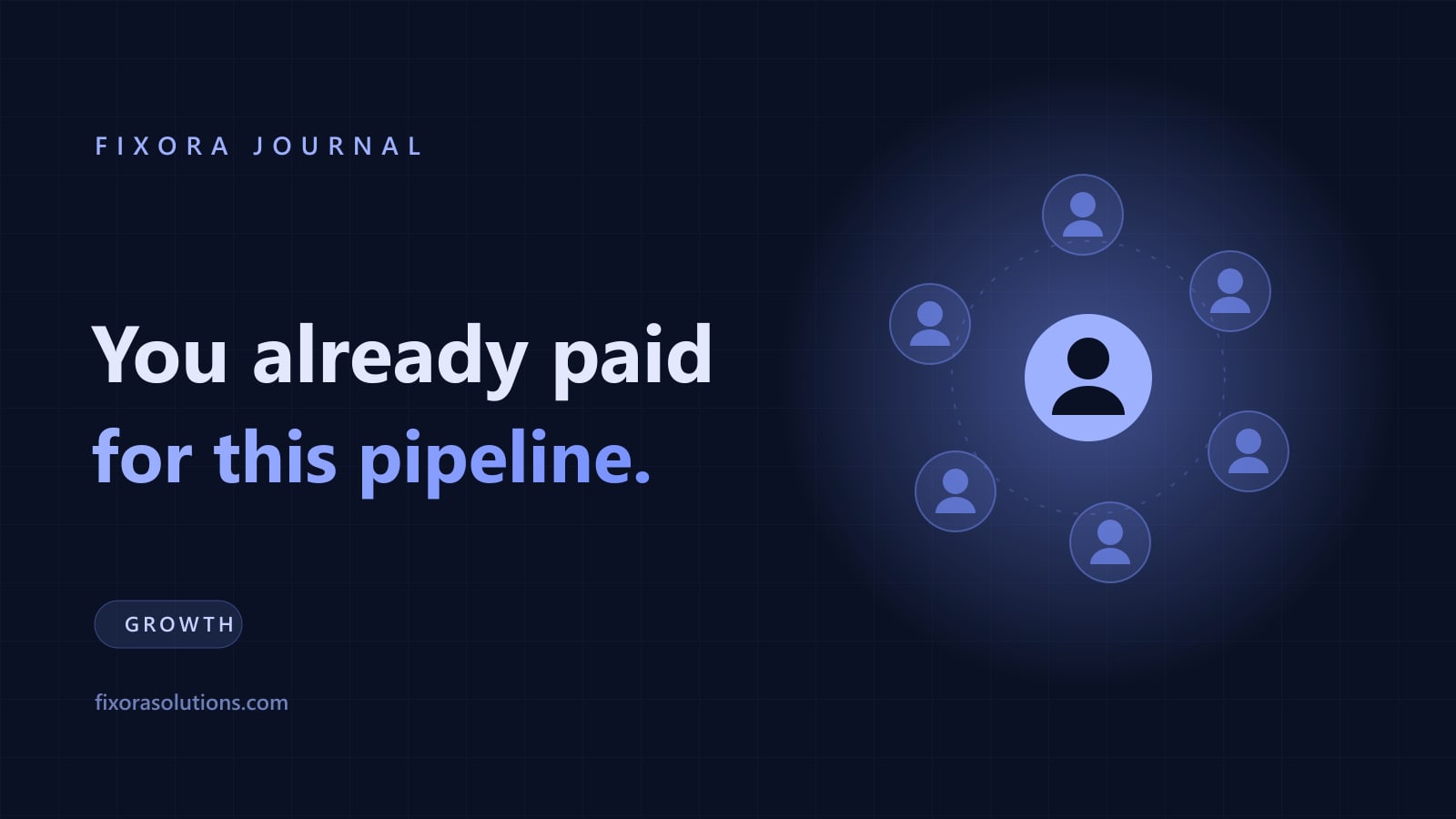
Every business has a list of people who nearly bought, used to buy, or went quiet. Most of them are not lost. They are just not being asked, because asking feels like admitting the first attempt failed.
The list you are ignoring
Open your CRM and count three groups:
- People who enquired in the last two years and did not buy
- Customers who bought once and never came back
- Customers who used to be regular and quietly stopped
For most businesses that list is larger than the number of new leads they will generate this quarter, and every name on it already cost money to acquire. They know who you are, which removes the most expensive step in the whole funnel.
Nobody works this list, for a reason that is emotional rather than commercial: contacting someone who did not buy feels like inviting a second rejection.
Why they actually went quiet
The stories people tell themselves are "we were too expensive" and "they went with a competitor". In practice, when you ask, the answers are mundane.
The project got deferred. The person who was championing it left. Somebody else got the budget that quarter. They meant to come back and then Q4 happened. Nothing was wrong with you, and in a large share of cases nothing has been decided since.
That is why reactivation works. You are not overturning a decision. You are arriving at a moment when the original blocker has often expired.
Segment before you send
A single "we miss you" blast to everyone is the version that fails, and it is what most businesses try once before concluding reactivation does not work.
Closed lost, price objection. Contact when something has genuinely changed: a new tier, a smaller scope, a phased option. Do not contact with the same offer at the same price; nothing has changed for them either.
Closed lost, timing. The best segment in the whole list. Contact at the point the timing reason expires: new financial year, after the project they mentioned, when the season turns.
Closed lost, champion left. Do not chase the old contact at the old company. Two better plays: find their replacement, and find where your champion went, because they may buy from you at the new employer.
Lapsed customers. They already know the product works. The message is not persuasion, it is a reminder plus a reason now.
Never responded. Lowest value, cheapest to include. One attempt, then remove them, because sending repeatedly to people who never engaged damages deliverability for everyone else.
What the message has to do
Be from a person, to a person. Reactivation is the least appropriate place for a designed template. Plain text, one sender, short.
Reference the actual history. "You asked about the site rebuild last March" outperforms "we noticed you have not been in touch" by a wide margin, because the first proves you are a business with records and the second proves you are running a sequence.
Give a reason for the contact now. A change on your side, a change in their market, or a genuinely relevant piece of work. Contacting with no reason is what makes reactivation feel like spam, to them and to you.
Ask a question that is easy to answer. "Is this still on your list for this year?" gets replies. "Book a 30 minute call to discuss your requirements" does not.
Make no as easy as yes. Explicitly offering the option to be taken off the list increases replies, and the nos are valuable: they clean the database and tell you why, which is data you did not have.
The cadence
Two emails, ten to fourteen days apart, then stop. A third adds almost nothing and starts to cost you goodwill.
Run it as a batch of fifty at a time, not a blast to everyone. Fifty personalised messages beat a thousand generic ones on reply rate and on what you learn, and a small team can actually follow up on the replies. Sending more than you can answer within a day is self defeating, given how quickly response time decides the outcome.
Measuring it without lying to yourself
The honest measures are replies, conversations booked, and pipeline created. Open rates have been unreliable since privacy protections started prefetching images, so treat them as a trend at best.
Be careful attributing revenue to reactivation alone: someone who was going to return anyway will show up in this campaign and get credited to it. Compare against a held back control group if the list is large enough, and if it is not, describe the result as evidence rather than proof, in the spirit of claims that survive scrutiny.
Make it a routine, not a rescue
The reason reactivation gets run in bad quarters is that it works, which is an argument for running it in good ones. A monthly hour on the closed lost list from twelve to twenty four months ago is the highest return hour in most sales operations, and it pairs naturally with the CRM hygiene routine, because you are touching the same records anyway.
Frequently asked
How far back should we go? Two years for services, longer for high value or infrequent purchases. Beyond that the contact data is usually wrong.
Is this GDPR compliant? If they enquired or bought, you generally have a lawful basis for relevant B2B contact in most jurisdictions, and you must honour opt outs immediately. Check your own position; this is not legal advice.
Can Fixora run it? Yes: segmentation, the messages, and the follow up discipline. Send us the list size and get a plan within 48 hours.
Have a project that needs this?
Tell us what you are building. We reply within 24 hours.
The service behind this
AI Marketing Services
A full marketing function without the headcount: strategy, content, campaigns, and outbound, run as one system and reported on the numbers that decide whether it paid.