The 60/40 Rule: Why All Performance Marketing Eventually Stops Working
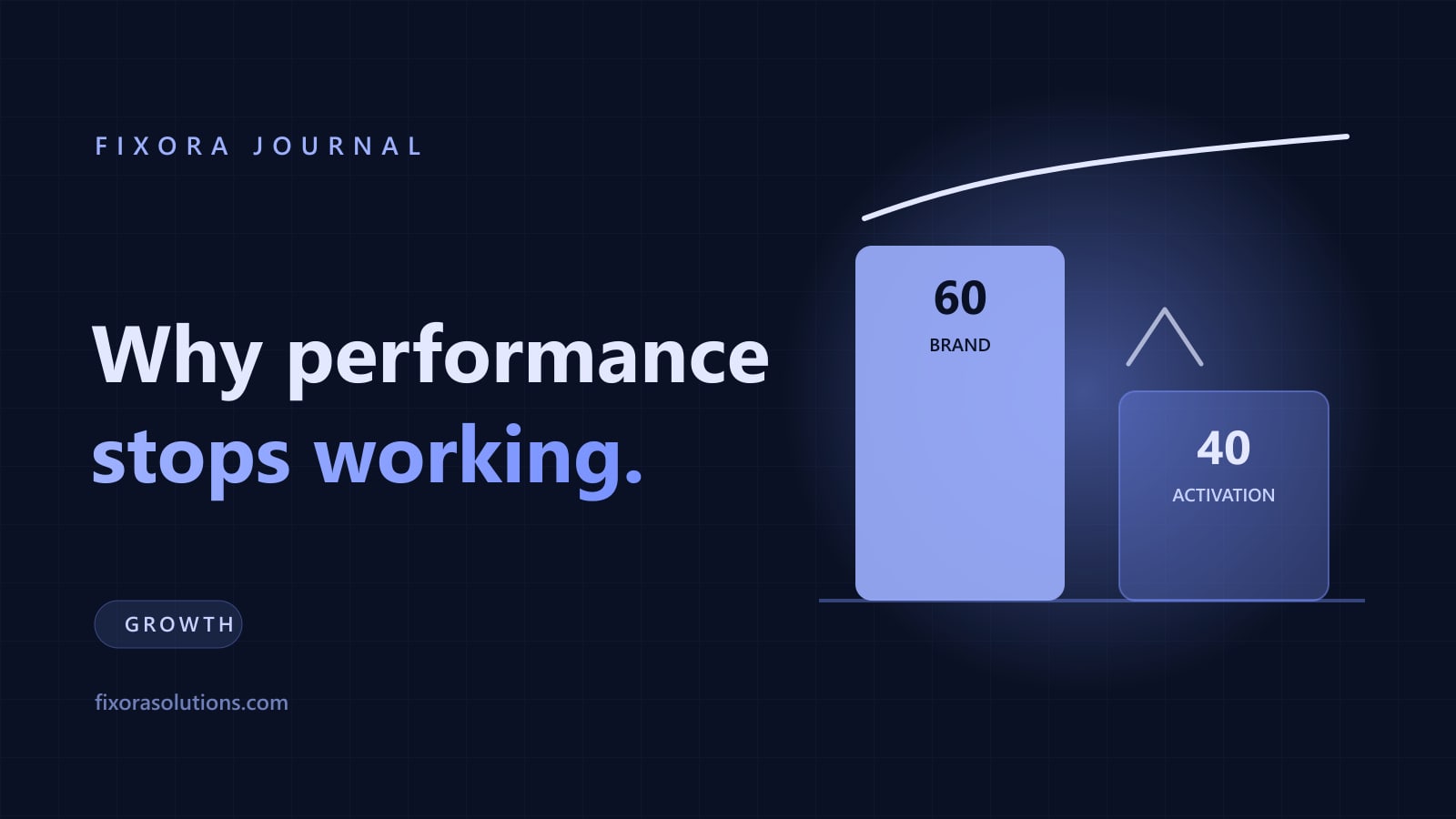
Binet and Field's analysis of hundreds of IPA case studies found the most effective split is roughly 60% brand building and 40% activation. Most small firms run 0/100 and wonder why costs keep climbing.
The slow squeeze everyone recognises
Year one, the ads work. Year two, the same campaigns cost more per acquisition. Year three, the team is optimising audiences and creative constantly just to stay level, and any pause in spend means an immediate drop to nothing.
That trajectory is not bad execution. It is the predictable result of buying only demand that already exists and never creating any.
What the research actually found
Les Binet and Peter Field analysed hundreds of case studies from the IPA databank, one of the largest bodies of evidence on advertising effectiveness. Their finding, published as The Long and the Short of It, was that the most effective campaigns split budget roughly 60% to brand building and 40% to sales activation.
The two do different jobs on different clocks:
- Activation produces a sharp, immediate spike in sales that decays almost as fast as it appeared. It converts people already in market.
- Brand building works slowly, produces smaller immediate response, and accumulates. It reduces price sensitivity and lowers the cost of every future activation.
The ratio shifts by category and business model, and in B2B the evidence points nearer a 46/54 split. The principle survives the variation: an all activation budget maximises this quarter and quietly raises the cost of every quarter after it.
Why performance only decays
Activation harvests. It does not plant.
Pair this with the 95:5 rule and the mechanism is obvious. If only 5% of buyers are in market at any moment, pure performance marketing competes for that 5% against everyone else, forever, in an auction. As competitors bid for the same small pool, the clearing price rises. Nothing you do to your targeting changes the size of the pool.
Brand building changes who thinks of you when the other 95% eventually enter it. That is the only durable escape from the auction.
What this looks like on a small budget
You will not run television. The principle still applies, and it costs attention rather than money:
- Be consistent. A recognisable name, look, and voice across everything. Consistency is the cheapest brand asset available and most small firms squander it by redesigning constantly, per the brand identity guide.
- Be present between needs. Weekly founder content is brand building with a labour cost rather than a media cost, per the two hour system.
- Publish against buying situations, so you are remembered attached to a trigger.
- Keep some activation running. Search ads and outbound capture the in market 5% and pay this quarter's bills, per the channel ranking.
- Do not judge them by the same metric. Activation gets cost per qualified lead. Brand gets branded search volume, direct traffic, and how often new enquiries say they already knew you.
The measurement trap
Brand building underperforms every short attribution window by design. If you judge it on ninety day return, you will cut it, and the cut will look correct for about two quarters. Then acquisition costs start climbing and nobody connects the two.
This is the single most common way marketing budgets get optimised into decline: every individual decision was defensible on the data available, and the aggregate was wrong. The fix is to measure the two jobs separately, as the six numbers sets out.
Frequently asked
Is 60/40 a law? No. It is the average of a large evidence base, and it varies by category, business model, and how established you are. Treat it as a corrective to 0/100, not a formula.
We are a startup with no revenue. Still? Weight harder toward activation early, because you need cash and proof. But do not let brand reach zero, and read marketing before product market fit first.
Can Fixora run both? Yes, and we report them separately so the slow half does not get cut on the fast half's timeline. Tell us your split today and get an honest read within 48 hours.
Have a project that needs this?
Tell us what you are building. We reply within 24 hours.
The service behind this
AI Marketing Services
A full marketing function without the headcount: strategy, content, campaigns, and outbound, run as one system and reported on the numbers that decide whether it paid.