Marketing a New Shopify Store: The First 90 Days
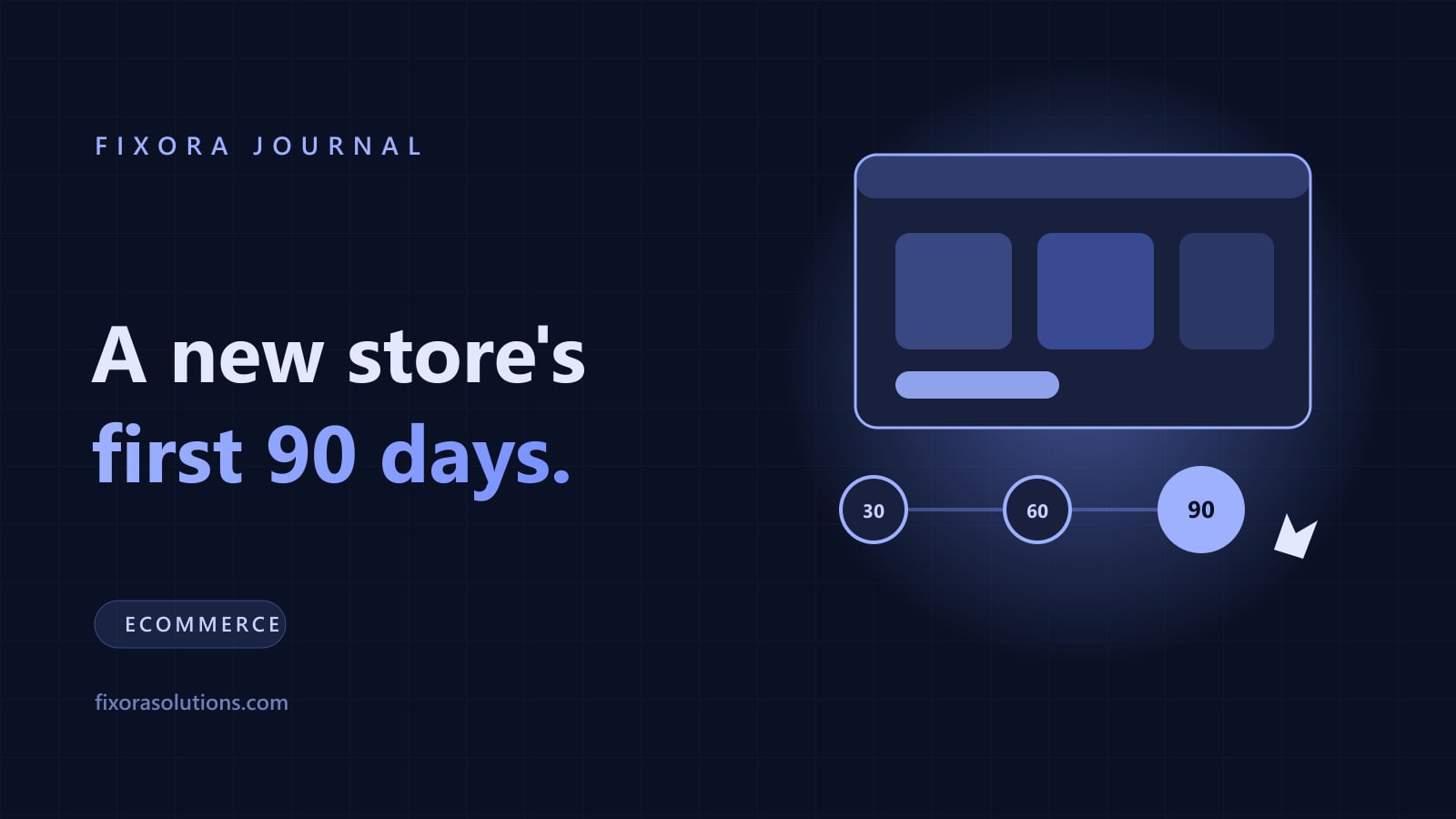
Most new stores spend on ads before the store can convert, then conclude ads do not work. The first ninety days have a sequence, and paid traffic comes fourth.
The expensive order of operations
The common launch sequence is: build the store, turn on ads, watch money leave, blame the ads. Traffic is the last thing a new store needs, because traffic only multiplies whatever the store already does. Sending paid visitors to a page that converts at 0.4% buys you an expensive lesson.
Here is the sequence that works instead.
Days 1 to 30: make the store worth sending traffic to
Fix the product pages. Multiple real photos including scale and detail, a description that answers objections rather than listing features, dimensions, materials, and delivery cost and date visible before checkout.
Fix checkout. Guest checkout on. Full cost shown early. Minimal fields. The reasons shoppers abandon are boringly consistent, and they are laid out in the cart abandonment guide.
Fix speed. Most new stores install eight apps and a heavy theme, then load slowly on the phones where most shopping happens. Every tenth of a second shows up in conversion, per the speed and sales data.
Get the first reviews. Even five. A product page with no reviews asks strangers to go first, and social proof is the cheapest conversion lever a new store has.
Days 15 to 45: the flows that print money quietly
Three automated email flows produce most of the early automated revenue, and they run whether or not you are working:
- Abandoned checkout, first message within an hour.
- Welcome sequence for new subscribers, introducing the brand and the bestseller.
- Post purchase, asking for a review and setting up the second order.
Set these up before spending on ads. They convert traffic you already paid for, and they sit inside the broader email economics. Make sure they actually arrive, per the deliverability checklist.
Days 30 to 60: earned traffic first
Organic social and creator content are how most new stores get their first real customers. Short vertical video showing the product in use outperforms polished brand film, per the short form video numbers.
Send product to a handful of small creators rather than one large one. The engagement and cost per result both favour the small accounts, as the micro influencer data shows.
Meanwhile, set up the basics of product SEO: unique titles, real descriptions, and collection pages that target how people search for the category rather than what you named it internally.
Days 60 to 90: now buy traffic
Only now, and only with a measurement setup that works: conversion tracking installed and verified, and a target cost per acquisition derived from your actual margin.
Start with retargeting, which converts the audience your earned work already warmed up. Then test one cold campaign with a small daily budget and a single variable. The comparison between search and social intent is covered in Google Ads vs Meta.
Judge everything on contribution margin after ad spend, not on return on ad spend alone. A 3x return on a 25% margin product is a slow way to go out of business.
Frequently asked
How much budget do we need to start? Less than most people spend, if the first sixty days are done properly. The stores that burn budget are the ones that skipped to day 60.
What if we get no sales in month one? Normal. Check whether people are reaching product pages and abandoning, or never arriving. The two problems have completely different fixes.
Can Fixora run this? Yes: the conversion work, the flows, the creator programme, and the ads once they are worth running. Send us your store and get an audit within 48 hours.
Have a project that needs this?
Tell us what you are building. We reply within 24 hours.
The service behind this
AI Marketing Services
A full marketing function without the headcount: strategy, content, campaigns, and outbound, run as one system and reported on the numbers that decide whether it paid.