Two Thirds of Google Searches Now End Without a Click
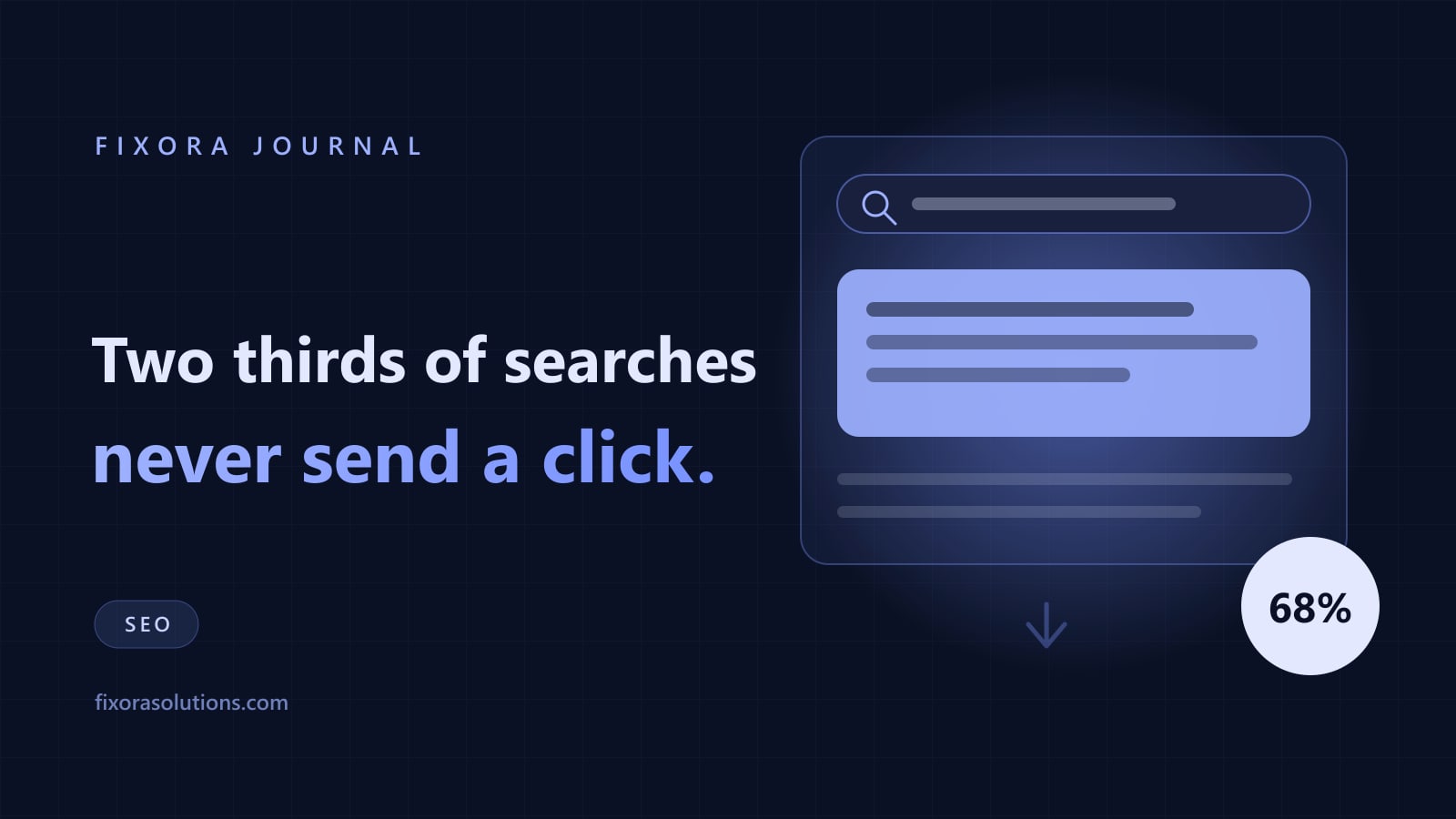
SparkToro's 2026 analysis of Similarweb clickstream data puts zero click searches at 68%. The search result is now the destination, and ranking first is no longer the same thing as being visited.
The number
In the first four months of 2026, 68.01% of US Google searches ended without a click, according to SparkToro's analysis of Similarweb clickstream data. In 2024 the same measure was 60.45%. In 2019 it was 49%.
Read that trend line rather than the single figure. Roughly a fifth of the clicks that used to leave Google have disappeared in seven years, and the rate of loss is accelerating.
What actually changed
Nothing about your rankings. What changed is what sits above them: featured snippets, the local pack, knowledge panels, product carousels, and now AI Overviews. Each one answers a question on the page instead of handing it to a website.
The uncomfortable version is that Google's index is doing what it was always trying to do. It was never a directory of links. It was a machine for answering questions, and it finally got good enough to answer most of them itself.
The practical consequence is that position one and a visit are now separate events. You can gain rankings and lose sessions in the same quarter, and both dashboards are telling the truth.
Not all queries lost equally
The averages hide the only distinction that matters for planning.
Informational queries lost the most. "What is a good conversion rate", "how long does SEO take", "email open rate benchmark". These are exactly the questions a results page can answer in a sentence, and increasingly does.
Transactional and local queries still send clicks. Nobody buys, books, or requests a quote inside a search result. Someone searching "marketing agency near me" or "hire video editor" is going somewhere, which is why local search remains one of the few places clicks behave the way they used to.
Branded queries are unaffected in the way that counts. Somebody searching your company name has already decided to arrive.
That is the whole strategic shift. Traffic from anonymous curiosity is a declining asset. Traffic from intent and from memory is not.
What to do about it
- Stop reporting sessions as the headline. Report impressions, average position, branded search volume, and enquiries. A page that gets 40,000 impressions and 900 clicks is doing work that a sessions chart will describe as failure.
- Write for the citation, not just the click. A clear claim with a number and a source is the kind of passage that gets quoted in a snippet or an overview. Vague throat-clearing never gets picked up. This is the same discipline as saying the number or saying nothing.
- Move budget toward the queries that still convert. Commercial pages, comparison pages, location pages, and pricing. Informational content still matters, but its job is now memory and credibility rather than sessions, which is exactly the 95:5 problem in search form.
- Give people a reason to arrive anyway. The calculator, the template, the real numbers, the case study with names in it. A results page can summarise an answer. It cannot hand over your tool.
- Track brand search as a channel. If your published work is doing its job, more people search your name each quarter. That line goes up even while non-branded clicks fall, and it is the cleanest available proof that the work is landing.
The part nobody wants to hear
If your entire SEO plan is publishing answers to common questions and waiting for traffic, you are competing directly with the thing that decides whether traffic happens. That plan degrades a little more every quarter.
The plan that holds up is narrower and harder: be the source that gets cited, own the queries where money changes hands, and build enough recognition that people arrive by name. We wrote about the citation half of that in getting cited by AI search and the traffic-quality half in what assistant referrals actually look like.
Frequently asked
Is SEO dead, then? No. Search demand is growing while clicks per search fall. The work is the same; the scoreboard changed and most people have not updated it.
Should we block AI crawlers to protect our content? Only if you would also accept never being cited. Blocking removes you from the answer, not the competition.
Can Fixora tell us which of our pages still earn clicks? Yes: a query-level split of your Search Console data into informational, commercial, and branded, with the pages worth defending. Send us the property and get the breakdown within 48 hours.
Have a project that needs this?
Tell us what you are building. We reply within 24 hours.
The service behind this
AI Marketing Services
A full marketing function without the headcount: strategy, content, campaigns, and outbound, run as one system and reported on the numbers that decide whether it paid.